US Treasury buying Japanese Yen… G7 countries spending more on interest then defence - catalysts for a gold rally
Published 05-AUG-2026 14:10 P.M.
|
2 min read
Anyone who follows the big media channels would have seen this over the last few days:
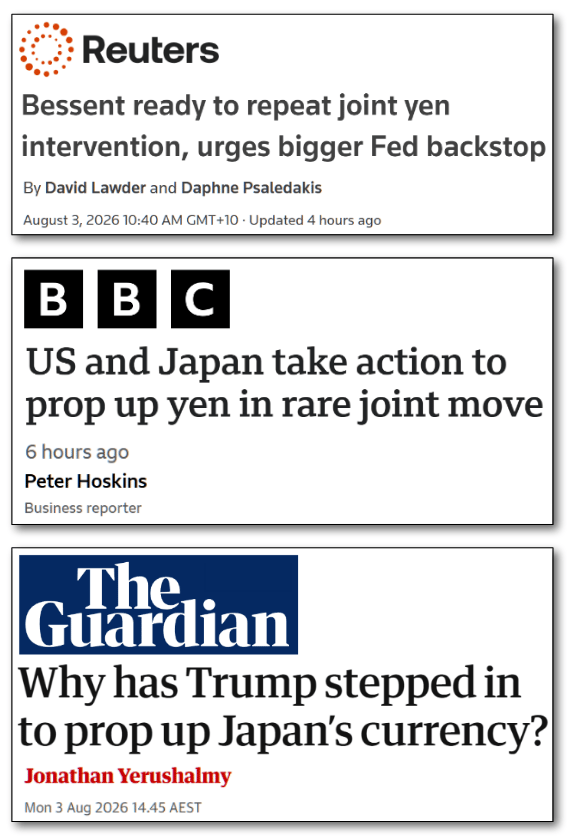
And this sneaky photo taken of US Treasury Secretary - Scott Bessent - at a US cabinet meeting where he has noted down to “Buy $5-10BN in Japanese Yen”:
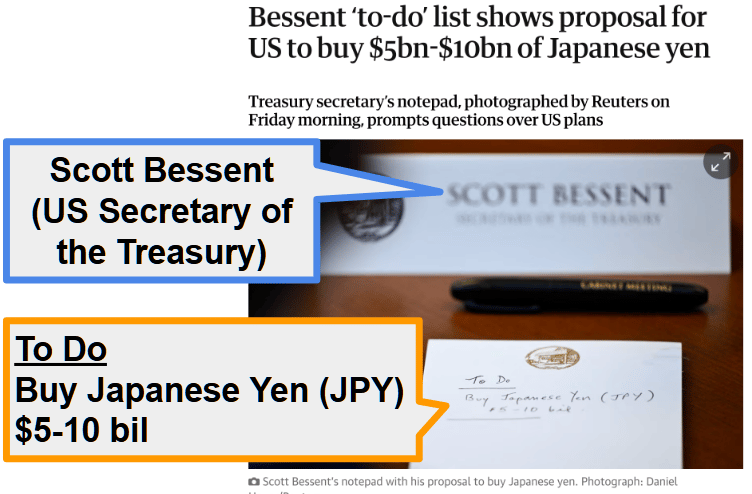
(source)
Without going deep on macroeconomics - all of this relates to the US Treasury intervening in currency markets to prop up the Japanese Yen and prevent it from depreciating.
Here’s the short version:
US buying yen = US selling/printing dollars = weaker dollar + a signal that the US wants the US dollar weaker = gold's two favourite things at once.
The US Treasury is buying Japanese Yen to stop its devaluation and is signalling to the market it will do whatever it takes to stop the Yen decline.
Which could mean more USD gets printed and pumped into the system.
Which is bullish gold - more USD printing SHOULD mean gold does well.
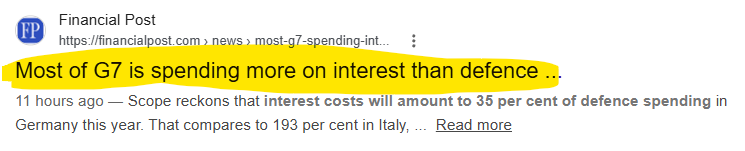
We also read this article yesterday which explains how most G7 countries are spending more on interest repayments than they are their militaries.
Which means more printing (to pay interest on debts) and more debt needed to build out militiaries… the fiat currency death spiral.
(again, more of gold’s favourite things - debt and money printing)
(source)
Of course we could be wrong - markets work in mysterious ways and the opposite to what we think is always very possible (even likely).
Legendary “gold royalty” pioneer Pierre Lassonde reckons gold is going to US$17,250 per ounce - but hey, he is always bullish so assume he could be incorrect.

“I Could Not Be More Bullish”: Pierre Lassonde’s $17,250 Gold Target
Maybe the currency market intervention is the first of many similar catalysts to take it there?
Looking at the gold chart it does look like the price has come to a point where it picks either up or down - so who knows:
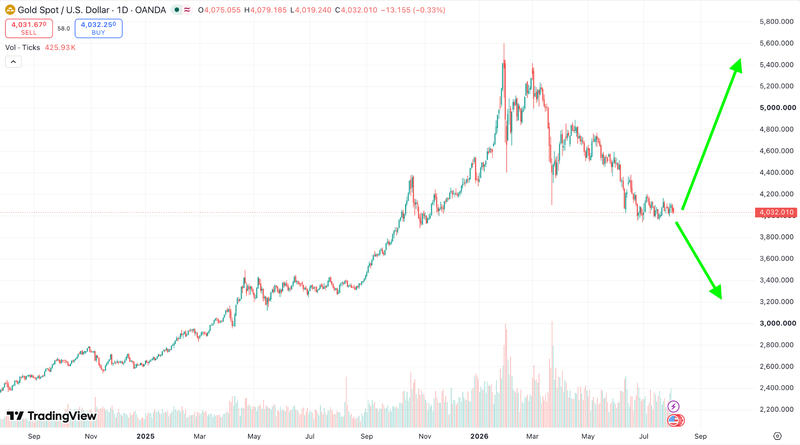
(source)
The past performance is not and should not be taken as an indication of future performance. Caution should be exercised in assessing past performance. This product, like all other financial products, is subject to market forces and unpredictable events that may adversely affect future performance.